
BooksHorror
The Picture of Dorian Gray
Trace Oscar Wilde's Dorian Gray from its 1890 magazine debut through censorship, controversy, adaptations, and its distinctive learner-friendly prose.
About the book
Dorian Gray by Oscar Wilde: History and Reception
About the author
Oscar Wilde was born on 16 October 1854 at 21 Westland Row, Dublin. His father, William Wilde, was a surgeon and antiquarian; his mother, Jane Wilde, wrote nationalist poetry as “Speranza.” Wilde studied at Trinity College Dublin and then Magdalen College, Oxford, where he won the Newdigate Prize in 1878 for “Ravenna.”
His aesthetic dress, wit, lectures, poems, criticism, and journalism made him a public figure before he wrote his only novel.
Wilde married Constance Lloyd in 1884 and edited The Woman’s World from 1887 to 1889. His fairy stories and essays had established a polished style when J. M.
Stoddart of Lippincott’s Magazine commissioned a long story. Dorian Gray grew out of Wilde’s fascination with art, beauty, influence, and the moral pressures placed on public identity.
How and when it was written
The shorter version appeared in the July 1890 issue of Lippincott’s Monthly Magazine, first printed on 20 June 1890. It was published simultaneously in American and British editions. Before publication, Stoddart deleted about 500 words without Wilde’s knowledge, including allusions to homosexual desire, the fictional book Le Secret de Raoul, and references to Dorian’s “mistresses.”
Wilde expanded the novella into the novel-length 1891 version, adding six chapters and a preface. The book was published in April 1891 by Ward, Lock & Company. It is therefore important to distinguish two textual histories: the censored magazine version and the revised book.
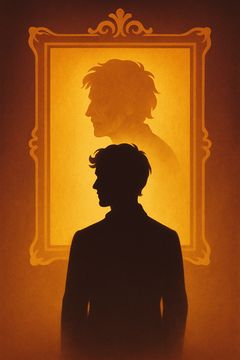
The story’s famous portrait is not simply a supernatural gimmick; it lets Wilde turn public appearance, private conduct, and artistic representation into visible conflict.
What the story is about
The painter Basil Hallward creates a portrait of the beautiful young Dorian Gray. Lord Henry Wotton introduces Dorian to a philosophy that treats youth and sensation as life’s highest goods. Dorian wishes that the portrait would bear the marks of age and experience instead of his own face.
He then enters London society, where beauty, influence, theatre, friendship, and secrecy shape his choices. This setup leaves the later consequences undisclosed.
How it was received
The first publication provoked significant controversy and criticism. Reviewers objected to its perceived indecency, while Wilde defended the work’s aesthetic and moral complexity. It was largely ignored until the 1980s, after which academic and popular interest grew sharply.
It is now widely treated as a classic of Gothic and English literature, and The Guardian placed it among the 100 best novels written in English.
The novel has been adapted for film, theatre, television, radio, and other art forms. Notable screen versions include the 1945 film starring George Sanders and Hurd Hatfield, and the 2009 film starring Ben Barnes. The Dorian Awards, established in 2009, take their name from the novel’s protagonist.
Its continuing influence comes from the portrait’s flexible symbolism: it can represent conscience, reputation, art, ageing, desire, or the split between a public self and a private life.
Wilde’s preface became part of the book’s history because it answered the charges made against the magazine version. Its claims about art, morality, and the artist frame the novel before the first scene. The publication controversy was not simply a reaction to supernatural content; reviewers also noticed the treatment of desire, influence, and male friendship.
The deleted passages show that editorial intervention shaped what early readers could see.
Dorian’s world maps late-Victorian cultural life. The novel moves among a painter’s studio, aristocratic drawing rooms, theatres, restaurants, and country houses. Wilde’s dialogue compresses social judgement into aphorism, while narration records clothing, flowers, music, books, and fashionable habits.
Learners meet precise physical nouns beside abstract words about beauty, pleasure, conscience, and reputation.
Why it works for language learners
Wilde’s prose is elegant but teachable because much of its meaning arrives in dialogue. Basil’s earnestness, Lord Henry’s epigrams, and Dorian’s changing self-description create a clear register contrast. Learners can study reported opinions, abstract nouns, comparisons, and persuasive conversation.
The Victorian setting supplies useful vocabulary—studio, portrait, theatre, society, reputation—while the chapters are usually focused enough for close reading.
Short public-domain phrases include “The only way to get rid of a temptation,” “You have a wonderfully beautiful face,” and “The picture had altered.” Learners can examine conditional structures, adjective placement, and the shift from present description to past action. Because many scenes hinge on a single polished sentence, rereading rewards attention to syntax rather than only plot.
The contrast between the 1890 novella and the 1891 novel is a compact lesson in revision. Wilde did not merely correct sentences; he changed the scale of the work and added chapters that gave the portrait’s effects more social and philosophical space. Stoddart’s deletions also show how a magazine editor could reshape a text before the author saw the printed pages.
A reader interested in literary history should keep publication version, authorial revision, and later reputation distinct.
The 1890 controversy and the 1891 revision also changed how later critics approached Wilde’s only novel. Some read it as Gothic horror, others as aesthetic theory, social satire, or coded queer history. The source supports the stable facts of publication and censorship, while interpretation remains plural.
That makes Dorian Gray a rewarding advanced text: its sentences are polished, but its historical meanings cannot be reduced to one moral.
The novel’s recurring objects make vocabulary memorable. A portrait, flower, book, theatre, carriage, and country house return with different emotional meanings as Dorian changes. Learners can build a concrete noun list first, then record the abstract adjectives Wilde attaches to each object.
Sources
Source text / credits: The Picture of Dorian Gray — Wikipedia · Oscar Wilde — Wikipedia · Project Gutenberg: The Picture of Dorian Gray
Frequently asked questions
How many chapters are listed for this edition of The Picture of Dorian Gray?
The catalog lists 20 chapters for this edition.
Where are the article sources?
The article lists its references in the Sources section at the end.
 Dracula
 Frankenstein
 The Phantom of the Opera
 The Strange Case of Dr Jekyll and Mr Hyde
 The Tell-Tale Heart
 The Turn of the Screw