
BooksDrama
Great Expectations
Discover how Dickens wrote Great Expectations, its 1860–61 serialization, critical reception, plot, language, and why learners can read it today.
About the book
Great Expectations by Charles Dickens: History and Reception
About the author
Charles John Huffam Dickens (1812–1870) was born in Portsmouth on 7 February 1812, the second of eight children of Elizabeth and John Dickens. His father worked as a clerk in the Royal Navy Pay Office. The family moved to London in 1815, then to Sheerness and Chatham, where Charles spent formative years.
His childhood changed abruptly when John Dickens was imprisoned for debt: at twelve, Charles left school and worked in a boot-blacking factory. He later returned to education and entered journalism.
That early collision between respectable appearances and financial vulnerability became important imaginative material. Dickens became a journalist, edited a weekly journal for two decades, wrote fifteen novels and five novellas, and gave public readings. His campaigning included children’s rights, education, and social reform.
By the Victorian period he was a celebrity as well as a novelist. Great Expectations therefore came from an experienced serial professional who understood both a broad audience and the institutions—law, prisons, debt, work, and class—that shape Pip’s world.
How and when it was written
Great Expectations was Dickens’s thirteenth novel and his penultimate completed one. The surviving account in the book history describes its first conception as “a very fine, new and grotesque idea.” He made it his second novel after David Copperfield to use a fully first-person narrator.
That choice lets an older Pip examine the errors of the boy he once was, while keeping the reader close to a child’s fear and ambition.
Dickens published the novel in his weekly periodical All the Year Round from 1 December 1860 through August 1861. This was serialization, not a single launch: readers encountered Pip’s marshes, London, and moral reversals in instalments. Chapman & Hall issued the three-volume book edition in October 1861.
The first edition ran to 544 pages. Its principal settings are Kent and London in the early to mid-nineteenth century, giving the narrative a recognizably English geography as Pip moves from a village forge toward metropolitan gentility.
What the story is about
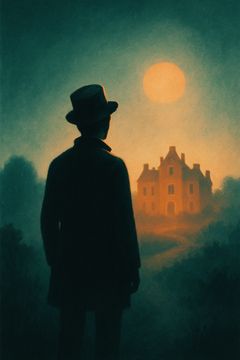
Pip is an orphan being raised by his severe older sister and her kind husband, Joe Gargery, a blacksmith. At the beginning, the child meets an escaped convict in a Kent churchyard and is forced into a secret act of help. That encounter gives the novel its atmosphere of marshes, chains, soldiers, and guilty memory.
Pip’s life changes again when Miss Havisham, a wealthy recluse in the decaying Satis House, asks him to visit. There he meets Estella, a beautiful and cold girl who teaches him to feel ashamed of his coarse clothes and forge. A lawyer, Mr Jaggers, later announces that an anonymous patron will fund Pip’s transformation into a gentleman.
The young man assumes he understands where the money and his future have come from. The story follows the consequences of that assumption without disclosing its ending here.
How it was received
The novel was very widely praised, though not unanimously. Thomas Carlyle called it “that Pip nonsense,” yet Dickens reported that Carlyle greeted each instalment with roars of laughter. George Bernard Shaw later described the work as “all of one piece and consistently truthful.”
Dickens himself was pleased by the public response and sales during serialization. Its long afterlife is measurable as well as impressionistic: the novel ranked seventeenth in the BBC’s 2003 The Big Read poll.
Its reputation has also been strengthened by circulation beyond Britain. The book has been translated into many languages and adapted repeatedly across media. Dickens’s characters have become cultural shorthand: Miss Havisham in her old wedding dress, Estella’s practiced coldness, Joe’s generosity, and the convict Abel Magwitch all remain recognizable.
The historical setting and the narrator’s retrospective self-criticism let later readers treat it both as a Victorian social novel and as a sharply economical coming-of-age story.
Why it works for language learners
This is a useful Dickens choice when a learner wants a sustained first-person voice rather than an impersonal historical chronicle. Pip’s narration alternates between immediate childhood perception and an adult’s precise judgment. The serialized design produces compact dramatic episodes—an encounter in the churchyard, a visit to Satis House, an arrival in London—so a learner can set manageable reading targets.
Victorian vocabulary appears in social titles, trades, legal language, money, clothing, and domestic work; context usually supplies the meaning.
The prose rewards attention to rhythm and irony. Short phrases from the public-domain text include “Take nothing on its looks,” “I was in mortal terror,” and “the marshes were just a long black horizontal line.” Learners can compare Pip’s concrete visual descriptions with dialogue from Joe, Jaggers, and Miss Havisham, whose registers differ markedly.
The book is challenging because Dickens compresses social history into idiom, but recurring characters and a strongly signposted plot provide support.
It is also a useful study in narrative time. The adult speaker knows which details matter, but he does not erase the confusion of the child at the centre of the scene. Learners can mark verbs of seeing, hearing, guessing, and remembering, then notice how a simple encounter becomes morally complicated in retrospect.
Trades such as blacksmithing and law add practical nouns, while Pip’s movement between Kent and London supplies a repeated contrast between local speech and metropolitan manners. That combination makes the novel’s historical English concrete rather than merely antique.
The book gives learners a practical way to notice social labels. Pip moves among orphan, apprentice, gentleman, debtor, and benefactor, and each noun carries expectations about conduct. Following those labels beside the events is a compact lesson in how Victorian fiction makes class audible.
Sources
Source text / credits: Great Expectations — Wikipedia · Charles Dickens — Wikipedia · Project Gutenberg: Great Expectations
Frequently asked questions
How many chapters are listed for this edition of Great Expectations?
The catalog lists 59 chapters for this edition.
Where are the article sources?
The article lists its references in the Sources section at the end.
 A Tale of Two Cities
 Anna Karenina
 Madame Bovary
 The Scarlet Letter
 A Connecticut Yankee in King Arthur's Court
 A Midsummer Night's Dream